Bangladesh close to becoming largest cotton apparel exporter: USDA

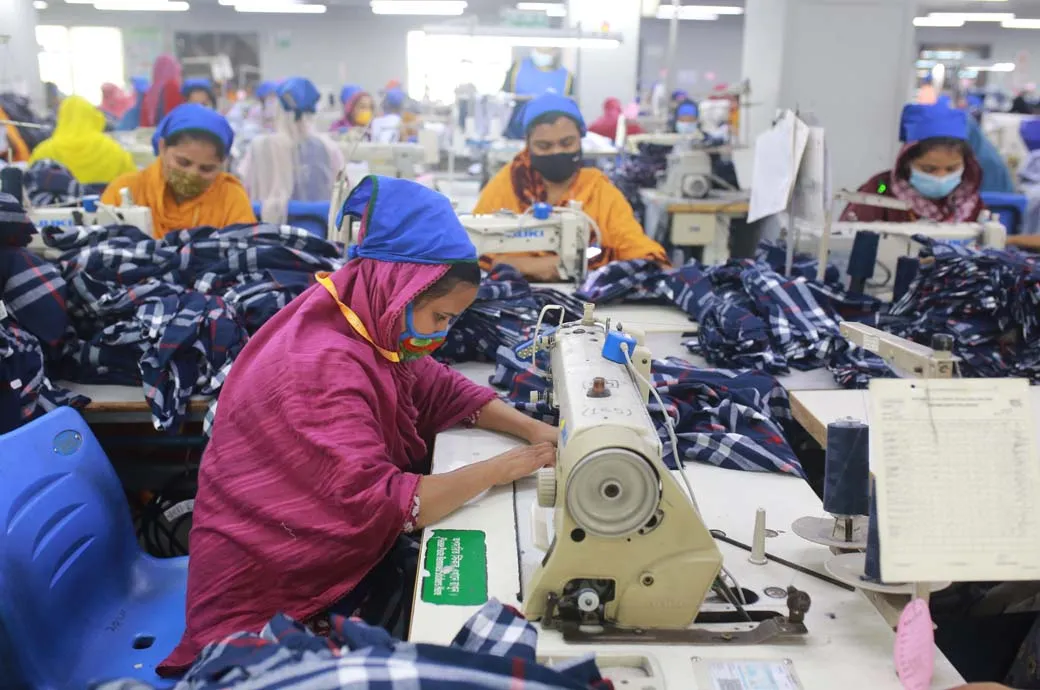
Bangladesh’s cotton consumption for 2023-24 is forecast to increase by 800,000 bales to 8 million, driven by burgeoning apparel exports, according to the latest USDA Cotton World Markets and Trade report. The country is close to surpassing China as the world’s largest cotton apparel exporter, with stronger demand prospects expected to drive cotton consumption even higher.

Practically all cotton yarn, which accounts for the nation’s cotton consumption, is sold domestically to Bangladesh’s robust fabric and apparel sectors. Apparel exports have been vital for Bangladesh’s economic growth and stabilising its domestic currency by obtaining US dollars through foreign sales.

The Bangladesh Garment Manufacturers and Exporters Association (BGMEA) reported that apparel accounted for over 80 per cent of the country’s total exports in the fiscal 2023 (FY23) (June 2022–July 2023), amounting to roughly $47 billion. This value is more than double the figure from a decade ago and surpasses the previous year’s record, reflecting global importers’ increasing preference for Bangladesh’s cotton products.

Apparel exports to the world’s largest importing markets, such as the United States and the European Union, were notably high in 2022. The United States Fashion Industry Association’s (USFIA) annual Fashion Industry Benchmarking Study highlighted factors that support even stronger future apparel export prospects.

According to the study, US fashion companies are reallocating sourcing orders to markets, including Bangladesh, in response to the Uyghur Forced Labor Prevention Act, China Section 301 tariffs on Chinese apparel exports, and efforts to minimise logistical and political risks. Bangladesh, India, and Vietnam were identified as the three suppliers that retailers plan to increase sourcing from over the next two years. Moreover, the USFIA study showed that Bangladesh is the most competitive apparel supplier from a cost structure point of view, scoring higher than any other country.

The Export Promotion Bureau of Bangladesh is targeting more than $50 billion of apparel exports in FY24. Meanwhile, spinning mills’ operating rates in 2023-24 are expected to rise, reflecting the textile supply chain’s replenishment of depleted stocks of yarn, fabric, and apparel.

On a global scale, the 2023-24 outlook for cotton shows production down more than 2.7 million bales to 114.1 million bales, primarily due to lower US and Uzbekistan crops. Consumption is up for the second consecutive month at 116.9 million, mostly led by China. Global trade is forecast up 400,000 bales to 43.9 million, while global ending stocks are down 2.9 million to 91.6 million bales. The US season-average farm price for 2023-24 is forecast up 3 cents to 79 cents per pound, the report added.

For the 2022-23 outlook, production is slightly higher at 118.3 million bales with larger crops in Brazil and Argentina. Consumption is projected up more than 700,000 bales to 110.5 million, led by higher use in China, Turkiye, and Bangladesh. Global ending stocks remain unchanged at 94 million bales, 8.5 million higher compared to the previous year.

News Source : www.fibr2fashion.com
Global cotton benchmarks flat or lower over past month: Cotton Inc

The global cotton benchmarks remained flat or lower over the last one month, Cotton Incorporated has said.

With the latest declines, the NY/ICE December contract has been testing the lower end of the shorter-term range between 85 and 90 cents/lb that has contained values since late August. Current values are near the middle of the longer-term range for nearby prices between 78 and 90 cents/lb that has held prices for nearly one year.

The A Index recently shifted a little lower alongside NY/ICE futures, with values easing slightly from 98 to 96 cents/lb, Cotton Inc said in its Cotton Market Fundamentals & Price Outlook – October 2023.

Chinese prices (China Cotton Index or CC 3128B) were stable at 113 cents/lb. In domestic terms, values were also steady, near 18,200 RMB/ton. The USD/RMB exchange rate was nearly unchanged over the past month, holding around 7.30 RMB/USD.

Indian spot prices (Shankar-6 quality) decreased from 95 to 90 cents/lb. In domestic terms, values fell from ₹62,000 to ₹59,000 per candy. The INR was steady against the dollar over the past month, near ₹83 per USD.

Pakistani spot prices decreased from 78 to 72 cents/lb between the middle of September and the present. In domestic terms, prices ranged between 19,000 to 16,600 PKR/maund. The PKR strengthened from 300 to 280 PKR/USD over the past month.

News Source : www.fibr2fashion.com

Bangladesh targets $300 bn in exports by 2041: Commerce minister

Bangladesh targets $300 billion in exports by 2041, commerce minister Tipu Munshi said recently.

His ministry is formulating innovative and business-friendly policies to attract foreign buyers, brands and investors to consolidate export-oriented growth and diversify exports, Munshi told a press conference announcing the ‘4th Bangladesh Leather Footwear and Leather Goods International Sourcing Show-BLIS-2023’, to be organised on October 12-14 in Dhaka.

The show was organised by the Leather Goods and Footwear Manufacturers and Exporters Association of Bangladesh (LFMEAB).

Leather products are significantly contributing to exports and the country is fast emerging globally as a reliable source of leather products, he was quoted as saying by domestic media reports.

The exhibition will also host three sessions in which more than 200 industry professionals, policymakers and foreign experts will participate.

News Source : www.fibr2fashion.com

Bangladesh most competitive in apparel prices: USFIA study

Bangladesh remains the most competitive globally in product prices among apparel manufacturing nations, while price competitiveness of Vietnam fell this year, according to the ‘2023 Fashion Industry Benchmarking Study’ conducted by the United States Fashion Industry Association (USFIA).

The rating of Bangladesh regarding social and labour compliance increased to 2.5 in 2023 from 2 in 2022 due to collaborative efforts of various stakeholders to enhance social responsibility practices in the Bangladeshi garment industry since the Rana Plaza tragedy, it noted.

Highlighting the growing social and labour compliance risks associated with sourcing from China, Vietnam and Cambodia, the report found that the same associated with sourcing from Bangladesh have fallen in the last two years, despite lingering concerns.

Asia’s position as the dominant apparel sourcing base for US fashion companies, however, remains unchanged. Seven out of the top ten most-utilised sourcing destinations this year are Asia-based, led by China (97 per cent), Vietnam (97 per cent), Bangladesh (83 per cent) and India (76 per cent), the report showed.

The survey interviewed 30 executives at leading US fashion companies from April to June last year.

The average price-competitiveness rating for Vietnam fell from 3.8 to 3.5 this year. Compared with last year, respondents rated Vietnam as less price-competitive as an apparel sourcing base due to inflation and wage increases in the country, the report said.

China and Vietnam were rated as the most competitive in sourcing flexibility and agility this year as the lifting of COVID restrictions in these two nations has significantly reduced supply chain disruptions and facilitated smooth movement of goods.

Several supplying nations, including India, Vietnam, Bangladesh, Sri Lanka and members of the Dominican Republic-Central America-United States Free Trade Agreement (CAFTA-DR), received improved ratings regarding their sourcing flexibility and agility performance.

Several respondents expressed concerns over potential links of products of China and Vietnam to forced labour in the Xinjiang Uyghur Autonomous Region.

“The US fashion companies are deeply concerned about deteriorating US-China bilateral relationship and plan to accelerate ‘reducing China exposure’ to mitigate the risks,” the study report said.

US fashion firms are actively exploring new sourcing capacities and opportunities outside China and they have plan to increase sourcing from Vietnam, Bangladesh and India over the next two years, it said.

Fashion companies generally distribute their sourcing orders evenly among Vietnam, Bangladesh and other countries in Asia, the study added.

News Source : www.fibr2fashion.com